Canning on an Induction Cooktop: What Works, What Doesn’t, and How to Do It Safely
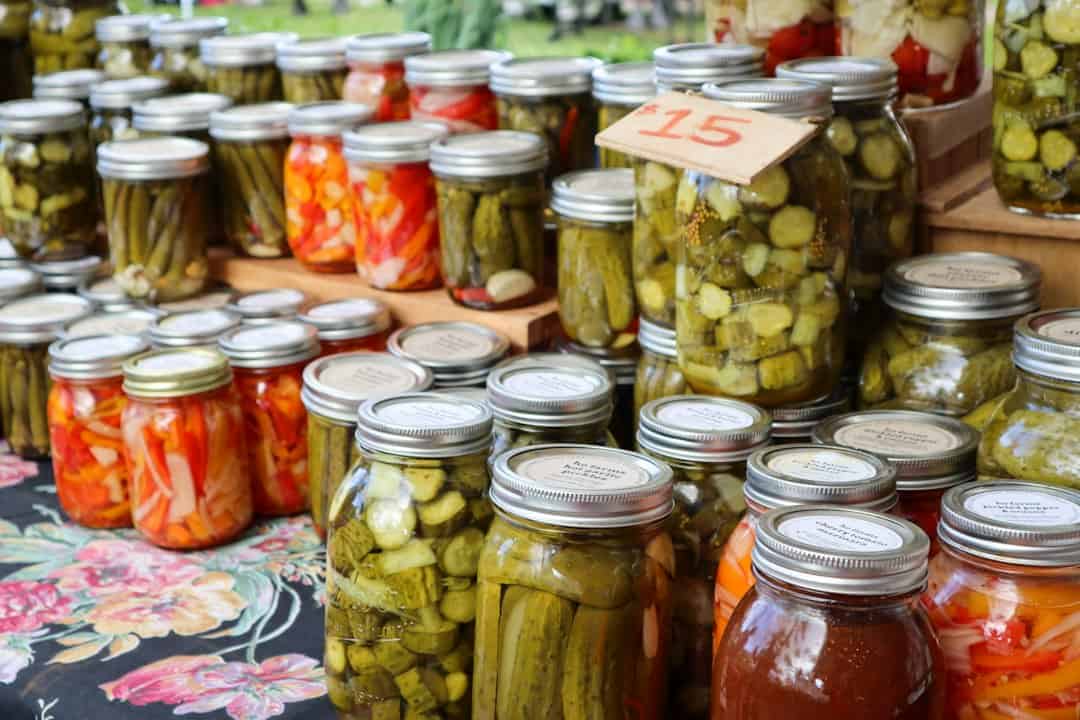
Yes, you can can on induction. Plenty of people do it every summer. But it’s not quite as simple as setting your old canner on the glass and walking away, and a couple of the gotchas can actually ruin a batch.
Here’s what I’d want to know before my first batch: which canners work, how big a pot your burner can handle, what to do if the cooktop shuts itself off mid-process, and why the extension services keep telling you to read your manual first.
The short answer
- Water bath canning on induction: works well with a magnetic stainless canner.
- Pressure canning on induction: works with an induction-compatible canner like the Presto 01784. Most pressure canners (including the classic aluminum Presto 01781 and the All American line) are aluminum and won’t heat at all.
- Built-in cooktops: check your manual. Some brands approve canning with limits on pot size; a few say don’t.
- Portable burners: doable, but watch the weight limit and the automatic shutoff.
Why canning is trickier on induction
Induction heats the pan, not the glass. That’s great for a skillet. With a canner it creates four problems you don’t have on gas.
1. Most canners aren’t magnetic
Speckled enamel-on-steel water bath canners often work. Aluminum ones don’t, period. The same goes for aluminum steam canners. Do the magnet test on the bottom before you buy anything; if a fridge magnet grabs it firmly, you’re good. More on that in how to tell if cookware is induction ready.
2. The pot is way bigger than the coil
A 21-quart canner has a base around 12 to 13 inches across. The coil under a portable burner is often 6 to 8 inches. Heat only goes where the coil is, so a big canner takes longer to boil and the edges run cooler. On a built-in cooktop, use your largest zone, or a bridge zone if your model allows it for one pot.
3. Automatic shutoffs
This is the big one. Induction cooktops have overheat sensors and auto-off timers. Penn State Extension and Michigan State University both warn that a cooktop cutting out mid-process can leave food underprocessed. If you’ve ever had a burner click off during a long simmer, read why induction cooktops turn on and off first, because a canner is the hardest test you can give it.
4. Weight on the glass
A full water bath canner with seven quart jars can top 40 pounds. A loaded 23-quart pressure canner is heavier still. Built-in cooktops are usually fine with that, but portable burners vary a lot, and many don’t publish a limit in their sales copy. Duxtop’s P961LS manual, for example, says up to 65 pounds. Lightweight home models are rated lower or not at all.

Step 1: Read your cooktop manual
I know, boring. But this is the one thing every extension service agrees on. Your manual will tell you whether canning is allowed, how wide the pot can be, and whether there’s a time limit on high power. Samsung, for example, has a support page specifically on canning and lists conditions for its cooktops. If your manual says no canning, don’t fight it.
As a rough guide, older USDA advice for electric ranges says the canner shouldn’t hang more than about 2 inches past the burner on any side. Your brand may be stricter, so the manual wins.
Step 2: Pick a canner that actually works
- Water bath: a stainless canner with a magnetic base, around 20 to 22 quarts. Enamel-on-steel works too if the magnet sticks and the bottom is flat.
- Pressure: the Presto 01784 is the common pick. It’s 23 quarts with a stainless-clad base, holds 7 quarts or 20 pints, and Presto says it’s for burners up to 12,000 BTU.
- Skip: aluminum canners, aluminum steam canners, and warped or domed bottoms. A domed bottom rocks on the glass and won’t heat evenly.
Bonus: the Presto 01784 also works as a water bath canner if you set the lid on loosely without the gasket and weight. One pot, both jobs.
Step 3: Get the water hot before it hits the burner
The slowest part of canning on induction is heating 3 to 4 gallons of water. A few tricks cut that a lot:
- Fill the canner with hot tap water, or pre-heat a kettle and top it up.
- Keep the lid on while it heats.
- Use your strongest zone and skip power-sharing. On many cooktops, running two zones on the same side lowers the power to both.
- Don’t lean on Boost for long stretches. Many cooktops drop Boost after a few minutes on their own.
Step 4: Hold the boil (or the pressure)
For a water bath, bring it to a full rolling boil, then start your timer. Most cooktops hold a rolling boil around medium-high once the water is there; you don’t need max power the whole time. My induction settings chart has the number ranges if your cooktop uses 1 to 10 or 1 to 9.
For pressure canning, follow your tested recipe: vent for 10 minutes, put the weight on, bring it up to pressure, then turn down until the weight rocks at the rate your canner’s manual describes. Induction responds fast, so make small changes and give it a minute.
Step 5: Know what to do if it shuts off
This is the part that keeps food safe. Tested canning guidance from the National Center for Home Food Preservation is simple:
- Water bath: if the water stops boiling at any point, bring it back to a full boil and restart the processing time from zero.
- Pressure: if the pressure drops below the target, bring it back up and restart the time from zero.
So stay in the kitchen. Set a phone timer to glance at the canner every few minutes. If your cooktop keeps cutting out, that’s your sign it isn’t the right tool for canning, and you may need a different burner or a different zone.
Canning on a portable induction burner
A lot of people can on a portable burner so they don’t have to tie up the kitchen range, or so they can do it in the garage or on the porch. It can work, with three caveats:
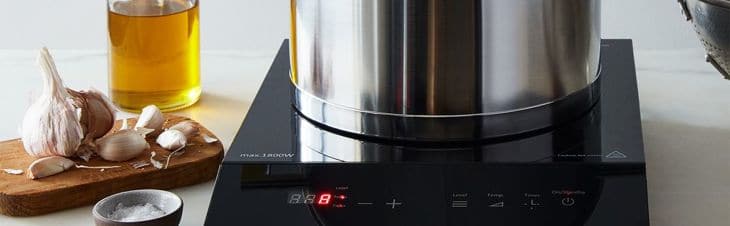
- Power: 1800 watts is the ceiling on a normal 120V outlet. That’s enough for water bath canning, just slower. Put it on its own circuit if you can; see portable induction electrical requirements.
- Weight: check the manual for a load limit. A loaded pressure canner is a lot for a lightweight burner.
- Track record: Presto told extension educators it found the Duxtop 9100MC acceptable with its 01784 canner. A 2025 Wisconsin Extension newsletter also pointed to the Duxtop Professional P961LS. Penn State still cautions that portable burners may lack the power or the weight capacity for pressure canning, so be conservative.
I put the burners and canners worth considering in the best portable induction cooktop for canning.
Protect the glass
- Lift the canner on and off. Sliding a 40-pound pot across glass is how you get scratches.
- Wipe the bottom of the canner dry first. Mineral spots and grit get baked into the glass.
- Skip the silicone mat for canning. Mats can trap heat under a pot that sits on high for an hour, and some aren’t rated for that.
- Wipe up boil-overs once things cool. Sugary jam spills are the hardest to clean if they bake on; my cooktop cleaning tips cover that.
Quick FAQ
Can I use my All American pressure canner on induction?
Not directly. All American canners are cast aluminum, so induction won’t see them. Converter disks aren’t a good idea under a canner either; they’re slow and they trap a lot of heat. If you’re curious about them for regular pots, see my induction converter disk guide.
My cooktop beeps and won’t heat the canner. Why?
Either the canner isn’t magnetic enough, or the base is too small or off-center for the zone’s sensor. Try the magnet test and center the pot. More fixes in induction cooktop not detecting pan.
Is induction faster than gas for canning?
On a built-in cooktop with a big zone, usually yes, at least for the heat-up. On a 1800W portable, it’s often slower than a good gas burner because the coil is small compared to the pot.
Can I steam can on induction?
Most steam canners are aluminum, so no. If you find a stainless one with a magnetic base, the same rules apply: keep the steam steady for the full time.
The bottom line
Canning on induction is totally doable. Get a magnetic canner, check your manual, preheat the water, and never walk away from a batch. If the boil or the pressure drops, restart the clock. Do that and induction is actually a pretty pleasant way to can, since your kitchen doesn’t turn into a sauna.
Sources
- Penn State Extension: Canning on Smooth Cooktops
- Penn State Extension: Is Canning on a Portable Burner Safe?
- Michigan State University Extension: Smooth cook-top stoves and canning
- National Center for Home Food Preservation
- Presto 01784 induction-capable canner sheet (via WSU Extension)
- Wisconsin Extension newsletter, November 2024
- Wisconsin Extension: Heat sources for stovetop canners (2025)
- Samsung: canning on your cooktop
- Healthy Canning: canning on glass and induction stove tops