Induction Cooktop Buying Guide
As an Amazon Associate, we may earn a small commission from qualifying purchases.
Confused about Induction Cooktops?
Induction cooktops heat compatible cookware directly and can offer efficient cooking, responsive power adjustments and easy cleaning. This buying guide explains what to compare before purchasing—including portable versus built-in designs, cookware compatibility, power requirements, controls and safety considerations. No cooktop is entirely risk-free, and hot pans can make the glass surface hot.
Induction cooktop buying checklist
- Choose the format: A portable single-burner model can add a cooking zone; a built-in cooktop requires appropriate counter space, electrical work and professional installation where required.
- Check the electrical rating: Countertop models and built-in models may require different outlets and circuit capacities. Always follow the exact manufacturer’s specifications.
- Match your pans: Verify that your most-used cookware has induction-compatible magnetic bases and meets the cooktop’s minimum and maximum pan sizes.
- Compare useful controls: Look at power levels, timers, control-lock options, fan noise and residual-heat indicators rather than advertised wattage alone.
- Check long-term fit: Confirm dimensions, ventilation clearances, warranty terms, repair support and return conditions.
See Also: our portable induction cooktop comparison and AmazonBasics 1800W single-burner review for a model-specific example. Check current specifications and availability before buying.
AzlinkPRO: Legacy Portable Induction Cooktops and Cookware
Compare the key features, then see current product details and pricing on Amazon.
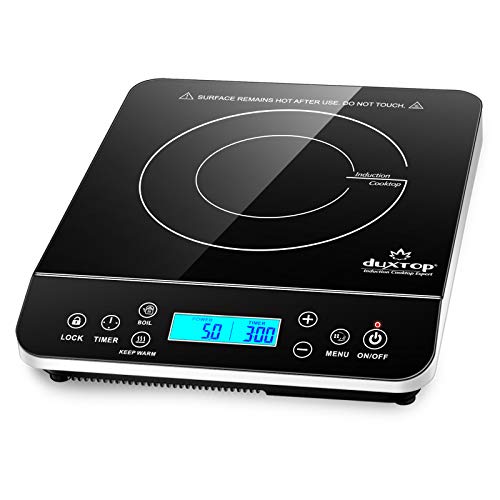
Compare model controls, power rating, compatible cookware and current availability

Compare model controls, power rating, compatible cookware and current availability
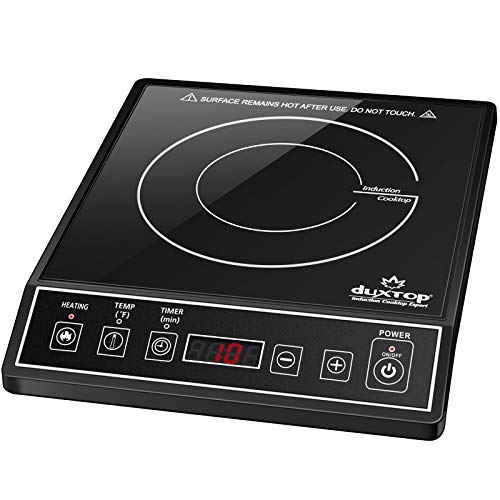
Compare model controls, power rating, compatible cookware and current availability

Compare model controls, power rating, compatible cookware and current availability

Compare model controls, power rating, compatible cookware and current availability

- Verify induction compatibility
As an Amazon Associate, we may earn a commission from qualifying purchases.
Portable Induction Cooktop Buying Guide
How do Induction Cooktops work
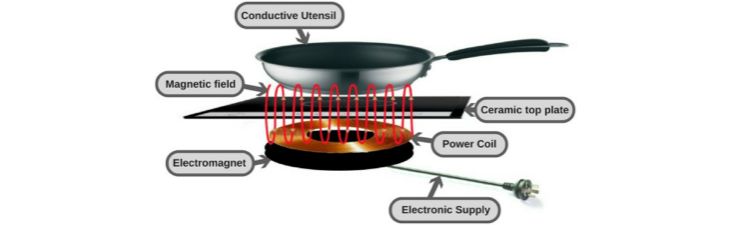
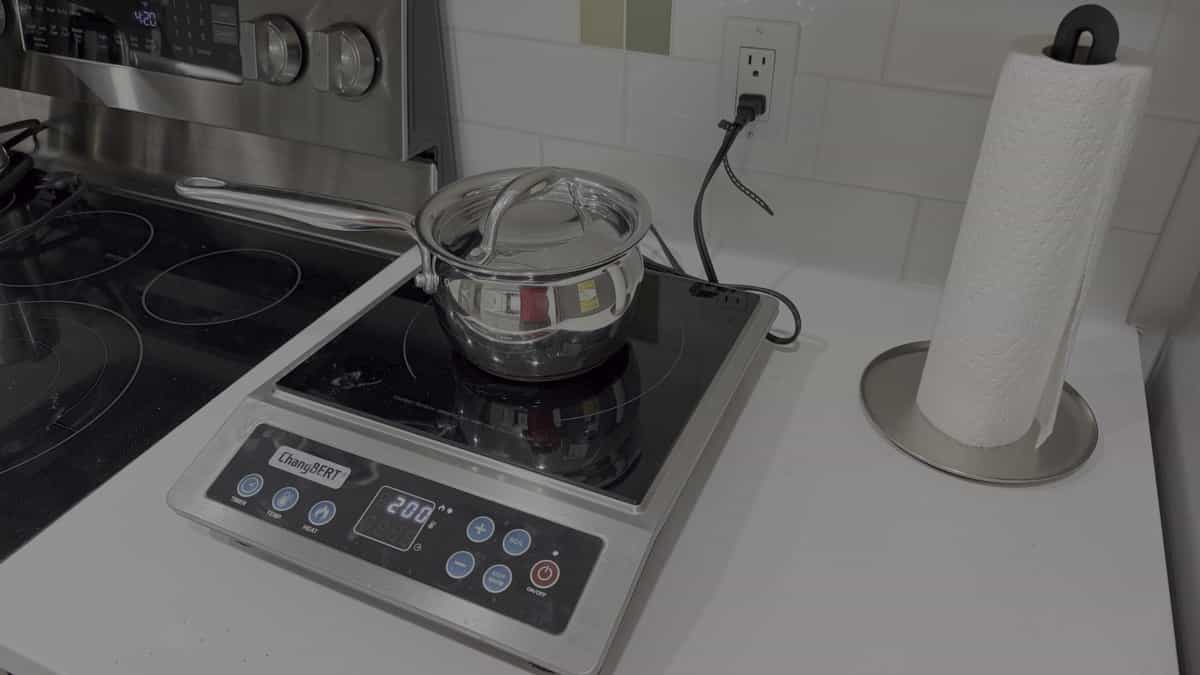
An induction cooktop contains an electrical coil beneath its glass surface. Alternating current through that coil creates a changing magnetic field, which induces electrical currents in suitable magnetic cookware. The pan generates heat that cooks the food. Read our explanation of how induction cooking works for more detail.
Induction heats the pan without requiring a red-hot burner underneath. However, the glass can become very hot through contact with heated cookware and may remain hot after cooking. Follow the manufacturer’s residual-heat indicators and do not touch the cooking area until it has cooled.
Compared with traditional electric resistance burners, induction generally responds more quickly to changes in power. The speed and efficiency of a particular cooktop still depend on its rated power, cookware and cooking task. Compare specific models rather than treating all induction units as equally fast or safe.
Related Topic:Nuwave PIC Titanium Review
Advantages of Induction Cooking
- Induction cooktops heat up extremely fast
- Induction cooktops are also very precise. This is useful when cooking dishes that require a constant temperature
- Induction does not burn gas at the cooking zone, so it avoids gas-combustion emissions there and typically sends less waste heat into the kitchen. Food still generates cooking fumes, and the glass can get hot from the pan. Learn more in our induction safety guide.
- Many models detect when suitable cookware is absent and may stop active heating. The behavior varies by model and does not replace switching the appliance off or supervising cooking.
- No exposed flame and direct heating of compatible cookware can offer safety advantages, but the glass may still be hot from the pan; never assume it is safe to touch immediately after cooking.
- Most induction cooktops have automatic switches to detect if there is nothing on it, meaning there’s less energy loss when leaving it on
- Children and the disabled will find it easy to use
- It’s easy to clean
Disadvantages of Induction Cooking
- Only stainless steel or cast iron can be used on your induction cooktops.
- You may have to replace pots and pans if they are not suitable for induction cooking
- It’s possible to hear some noise when cooking
- The installation process may require more work and energy
- You will have to be careful when cooking in order not to scratch the glass surface of the cooktop. This normally happens when you are frying
- Water can spill over and run under the glass, which may cause electrical problems. Though some inductions come with an automatic boil-over detector which switches off power when liquid is discovered on the surface of your cooktop
Factors to Consider When Buying an Induction Cooktop
Size
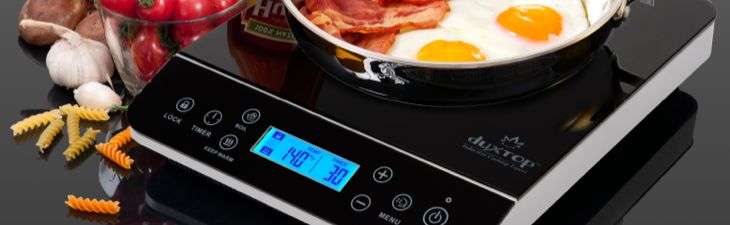
Choose the cooktop’s format and dimensions to suit your kitchen. In North America, built-in induction cooktops are often available in nominal 24-, 30- and 36-inch widths, with different cooking-zone layouts. Portable countertop burners are generally smaller. These are product categories, not guaranteed cutout dimensions: always consult the specific installation drawing.
Measure the usable counter space, existing cutout, nearby cabinets and required clearances. Compare those measurements with the manufacturer’s installation instructions, and verify the electrical circuit requirements before purchasing a built-in model.
Number of Cooking Zones
Normally a 60cm medium induction stove will provide 4 induction cooking tops, which should be enough if you are cooking basic meals. Wider cooktops will need additional cooking space; the more cooking tops you have, the easier for you to prepare large quantities of food.
If you are growing a family or using it for commercial purposes, a wide cooktop will easily accommodate large pots and pans. This will also save you a lot of time.
Cost
The cost of installing and purchasing an induction cooktop depends on the type you are buying. It is important to consider a few things before purchasing. You must consider the purpose (personal use or commercial use), your cooking style, energy bills, and the time you have to cook. The initial purchase price may be a big one, but it may be a better option for a long-term investment.
Installation Requirements
Induction cooktops require a lot of energy and therefore many require special power connections. (Note that this doesn’t mean that they are inefficient.) Related: portable induction electrical ratings and safe installation considerations.
An induction cooktop requires a standard connection. Our daily home plug may require 10Amp while an induction cooktop may require 20A, 32A or even 42A depending on the electrician.
Seek and ask questions from several installers to get the best price and method when you are ready to install. The price may likely depend on the type and model of induction cooktop you decide to use.
When installing the induction cooktops, it requires that specific dimensions are observed which would likely take more time. This is due to the amount of heat that the induction operating system releases during operation. Though they normally come with fans to disperse the heat, it’s also likely you hear some sounds during operation.
Always use the installation manual and hire a licensed electrician. This will ensure safety and will also ensure that the cooktop lasts longer.
Features of Induction Cooktops to Consider before Buying
Automatic pan size recognition
Many induction cooktops detect when a suitable pan is present, but that does not mean every unit automatically recognizes the exact shape of the pan or adjusts power for perfect efficiency. Cooking-zone dimensions and supported cookware sizes vary by model. Consult our induction-ready cookware guide and each appliance’s specifications.
Child Lock
Selected models feature a child lock to prevent your kids from playing with the controls.
Auto Shut-off
This feature automatically turns off the induction cooktop in case there is overheating or in the case of where the pan has been removed from the surface for a long period of time. Most models have some form of this feature.
Automatic Safety Shut-off
Some induction models include sensors or safety features intended to respond to spills, overheating, or a pan boiling dry. These protections are model-specific and are not a substitute for supervising cooking. Check the exact appliance manual to understand what its automatic shut-off functions can and cannot detect.
Boost
On models equipped with Power Boost, a selected cooking zone can temporarily use higher output for tasks such as bringing water to a boil. Available boost duration and power sharing vary by model, so compare the specifications for the appliance you are considering.
Built-in cooktop sizes: 30-inch or 36-inch?
If you are considering a built-in induction cooktop, compare cabinet cutout dimensions, cooking-zone layout and electrical installation requirements before ordering. Our 30-inch vs. 36-inch induction cooktop guide walks through the key measurements and buying considerations.
Planning a custom kitchen island? Invisible under-counter induction cooktops offer another design approach, but they require approved worktop materials and more specialized planning than a conventional built-in hob.
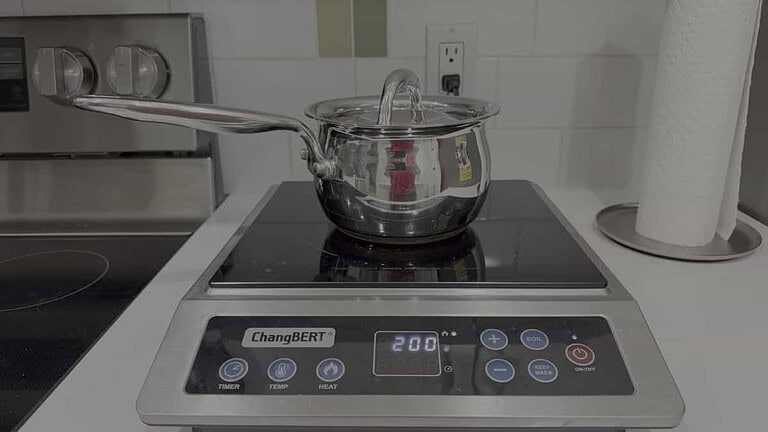
Prefer a product-focused perspective? Our ChangBERT 1800W review describes reported day-to-day impressions of a portable burner. Compare those observations with specifications and manufacturer instructions before choosing a model.
Final Thoughts: Induction Cooktop Buyers Guide
If you decide to purchase an induction cooktop, make sure you check your cooking specialist to help with sizes and styles of cookware that best fits your cooking standard as cookware advance daily.
Comparing older portable burners? Alongside current models, our reviews of the Gourmia GIC200, Waring Pro ICT200 and BergHOFF 1800W explain historical controls and cookware requirements. Check model age, manufacturer support and current availability before choosing any discontinued unit.
I hope we were able to provide you with the most extensive induction cooktop buyers guide.