Can You Use a Wok on an Induction Cooktop?
Yes, you can use a wok on an induction cooktop, but the easiest choice is a magnetic wok with a stable, flat bottom. A traditional round-bottom wok may be ideal over a shaped gas burner yet fail to make suitable contact with a conventional flat-glass induction element. Check both the wok’s material and its magnetic base diameter before buying.
What makes a wok induction-compatible?
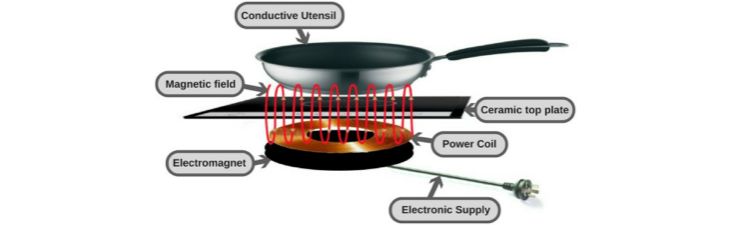
An induction element transfers energy to magnetic material in the cookware. Many carbon-steel and cast-iron woks are magnetic; bare aluminum and copper are not, unless constructed with a manufacturer-approved induction-ready magnetic base. The cookware also needs the flat contact area specified for the cooking zone.
GE Appliances recommends a flat-bottomed wok that attracts a magnet for its induction burners. If you cannot test the cookware, ask the wok’s manufacturer to confirm compatibility with flat induction surfaces.
Flat-bottom versus round-bottom woks
| Wok type | Best fit | Limitations on a flat induction surface |
|---|---|---|
| Flat-bottom carbon steel | Often a practical induction option | The flat magnetic contact area still must meet minimum pan size |
| Flat-bottom cast iron | Usually magnetic, with substantial heat retention | Heavy and less responsive when reducing heat |
| Round-bottom carbon steel | Traditional shaped burners or purpose-built induction wok systems | May not be recognized by flat cooktop; unstable contact |
| Aluminum wok without magnetic base | Conventional electric or gas cooking | Ordinarily not recognized by induction |
Why base size matters more than wok diameter
A 14-inch wok might have a much smaller flat section touching the cooktop. Because induction coils sense the magnetic material directly above them, the diameter of the base is more important than the rim width. GE’s cookware-sizing guidance advises measuring the flat magnetic area, not just the outer diameter.
If the pan’s flat section is smaller than the zone’s minimum requirement, it may fail to activate or heat at reduced output. A magnet test plus a ruler and the cooktop manual tell you more than a marketing label saying “induction compatible.”
Will a flat-bottom wok give the same results as a gas wok burner?
Not exactly. Traditional wok cooking over a concentrated flame heats the curved sides differently from a flat induction zone. On a flat induction cooktop most input energy enters at the bottom, while heat spreads toward the sides through the metal. This can work very well for smaller home batches, but you shouldn’t expect the same heat profile as a high-output commercial wok burner.
To preserve space for movement and promote even results, cook manageable portions rather than overcrowding the pan. Adjust power based on the ingredients, and follow the wok’s recommended seasoning and temperature instructions.
Carbon steel versus cast iron for a home induction wok
Carbon steel tends to be lighter and more responsive to heat adjustments than thick cast iron. Cast iron retains heat but can take longer to cool after a power change. Neither material is automatically the best choice for every cook; look for a stable, smooth base sized for the zone.
Avoid dragging a rough or dirty wok across glass. Lift it when moving it and clean the bottom of the pan before placing it on the cooktop.
Do wok rings and adapter disks help?
A ring designed for gas burners does not turn an incompatible, round-bottomed wok into a suitable flat-glass induction pan. Improvised supports can interfere with stability, detection and heat transfer. Some makers sell purpose-built induction wok burners with a curved bowl; those are a different appliance category from ordinary flat induction hobs. Only use accessories approved by the specific cooktop manufacturer.
Using an induction wok for stir-frying
A sensible starting point is a flat-bottomed magnetic wok, compatible with the cooktop and containing ingredients before high heat is applied. Warm the pan in accordance with its instructions, work in small batches and watch how quickly the food cooks. The precise setting varies with pan thickness and the appliance; a numbered heat level on one model is not a universal stir-fry setting.
Frequently asked questions
Can a round-bottom carbon-steel wok work on induction?
Only with an induction system specifically designed to support that wok geometry and size. An ordinary flat-glass element may not detect it safely or reliably.
Do I need a special “induction wok” label?
Look for actual manufacturer induction compatibility, a magnetic base and a flat bottom of sufficient diameter. Marketing labels alone do not establish a match to your cooktop.
Will a cast-iron wok scratch glass?
Rough bases and trapped grit can scratch when dragged. Keep surfaces clean and lift heavy pans instead of sliding them.
Manufacturer sources and related reading
- GE Appliances: using a wok on induction
- GE Appliances: induction cookware size and shape
- Lodge: care of cast iron on induction glass
- How to tell if cookware is induction ready
- Cast iron on induction: care and compatibility
Editorial note: This article explains published compatibility information, not independently tested stir-fry performance.