Why Is My Induction Cooktop Buzzing? Normal Sounds and Fixes
A gentle buzz or hum from an induction cooktop is often normal. The sound may come from the cookware, cooling fan or electronics. Try a different compatible pan and adjust the heat setting before assuming the appliance is faulty. A sound that becomes markedly louder, accompanies an error or comes with visible damage needs a different response.
This guide draws on manufacturer support information. It is a troubleshooting guide, not a sound-level test or a diagnosis of your appliance; your model’s instructions take priority.
Identify the sound before trying a fix
| What you hear | Possible explanation | First check |
|---|---|---|
| Buzz or hum that changes with the pan or heat setting | Cookware vibration; often normal | Compare another compatible pan and a lower setting. |
| High-pitched whistle with two zones running | Interaction between cookware and connected zones | Adjust one zone’s power; check your manual. |
| Regular clicking or pulsing at low heat | Normal operation on some models | Compare with the sounds described in your model’s manual. |
| Airflow or fan hum, including after switch-off | Electronics cooling | Keep ventilation openings clear; allow normal cool-down. |
| Crackling associated with one particular pan | Layered cookware can make this sound | Compare a different pan; do not assume all crackling is harmless. |
| New grinding, rapidly worsening noise, or noise with an error | Possible appliance problem | Stop troubleshooting by trial and error; contact manufacturer support. |
The normal-operation examples above are described by GE Appliances, Miele and Wolf. The same word—“buzzing,” for example—can describe different sounds, so note when it happens and where it seems to originate.
Why induction cookware can buzz
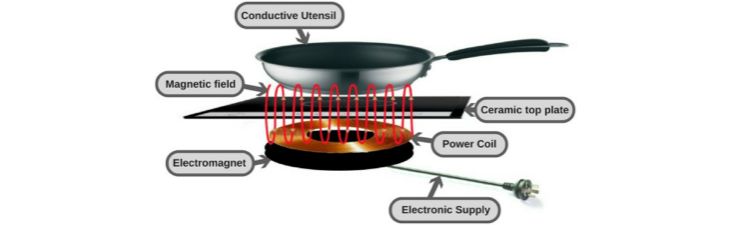
An induction burner uses a magnetic field to heat suitable cookware. The pan can vibrate audibly during cooking; hearing that vibration does not automatically mean it is incompatible. Our guide to how induction cooking works explains the heating process.
GE explains that pan construction, size and contents affect sound. It notes that heavier cookware such as enameled cast iron can be quieter than lightweight multi-ply stainless steel. That is a useful comparison to try, not a guarantee that every heavy pan will be silent. Miele also identifies vibration between layers of a cookware base as a possible cause.
A practical sequence for reducing the noise
1. Compare two suitable pans
Start with cookware you already own. Check the manufacturer’s induction marking and the cooktop’s permitted base sizes; a magnet check is a useful starting point. See how to tell whether cookware is induction ready. During ordinary cooking, compare two suitable pans on the same zone and setting. Do not heat an empty pan just to test the noise.
If the sound changes substantially with the pan, cookware is a likely contributor. If several pans produce the same unfamiliar sound, record that finding for the manufacturer instead of buying a complete new cookware set.
2. Check positioning and the pan base
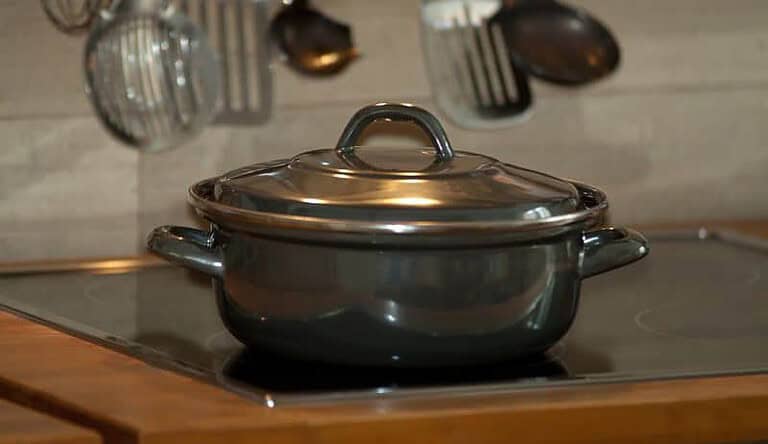
Center the pan on the appropriate cooking zone and use a flat base. Thermador’s troubleshooting guidance identifies warped bases and poor positioning as problems worth correcting. Let the surface and pan cool before inspecting or cleaning them. Wolf also advises keeping the pan bottom and cooking surface dry.
3. Adjust the setting while watching the food
Try stepping down from boost or maximum power when the cooking task allows it. Some high-power buzzing becomes quieter at a lower setting. With two zones operating, changing one zone’s setting can also reduce a whistle. Do not sacrifice the heat required by your recipe merely to suppress sound.
4. Distinguish fan noise from pan noise
A steady airflow sound may come from the cooling fan rather than the pan. Miele explains that this fan can continue after the controls are switched off. Changing cookware will not remove that sound. Keep the manufacturer’s ventilation clearances unobstructed; do not cover vents or place padding underneath a portable burner to muffle it.
When to stop using the cooktop and seek help
Wolf recommends contacting service when noise increases significantly over time. Note the model number, settings, cookware used and any error code. A short recording can help describe the problem, although it cannot establish a reliable decibel measurement.
Do not continue a noise experiment if you notice smoke, sparks, an electrical burning smell, repeated breaker trips or cracked glass. Switch off the appliance and disconnect power safely where possible; arrange qualified service rather than opening the housing. Zanussi specifically instructs owners to disconnect a cooktop with cracked glass.
For a displayed fault, use the exact model’s instructions: error codes are not universal. Our induction cooktop manual directory can help locate documentation.
Choosing a cooktop when noise matters
Ask for a working demonstration with cookware, not just a showroom display with illuminated controls. Compare the sounds during heating and lower-power cooking, and check the return policy before buying. Avoid treating an unsourced “silent” label as a measured performance result.
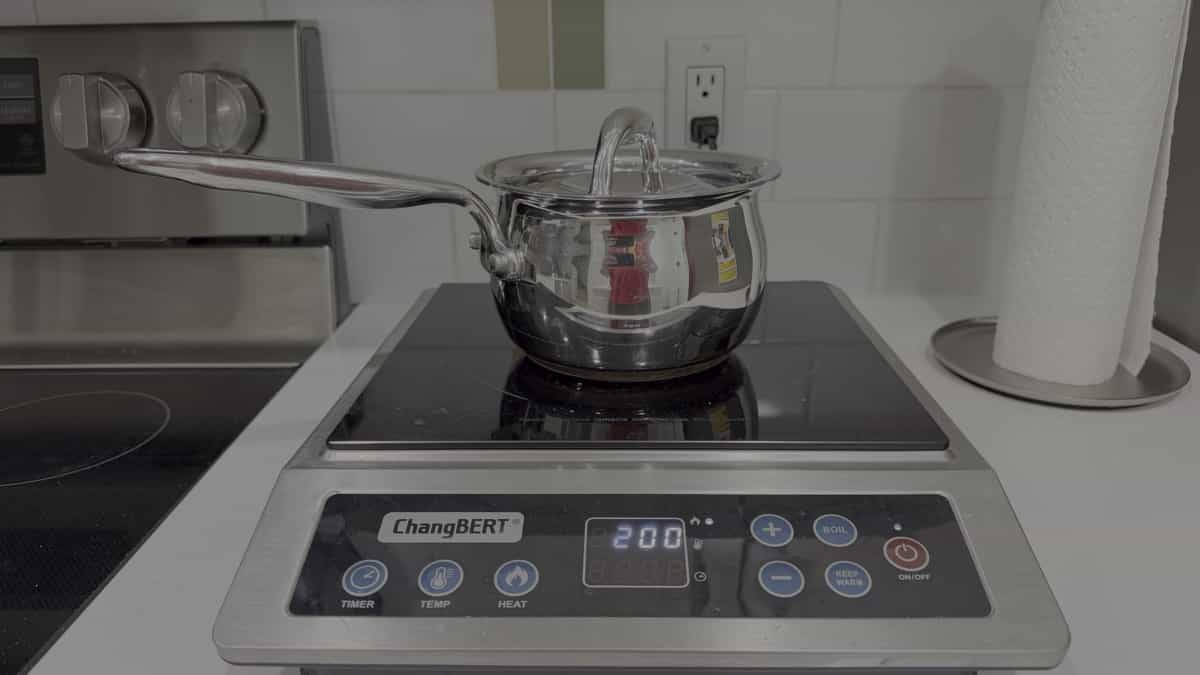
In our ChangBERT CIB-80 Plus review, Dennis describes the unit as somewhat quiet in everyday use. That is a personal impression, not a measured ranking against other burners. The induction cooktop buying guide covers other factors to weigh alongside noise.
Frequently asked questions
Is clicking at a low setting a fault?
Not necessarily. Wolf describes pulsing or clicking at low power as possible normal operation. Check the model’s manual, especially if the sound is new or accompanied by poor heating.
Why do I hear buzzing through my earbuds?
GE’s headphone guidance explains that active noise cancellation can magnify induction-related sounds. Compare with the earbuds removed, or try disabling active noise cancellation. This helps distinguish an audio-device effect from a sound heard directly in the room.
Will more expensive cookware always be quieter?
No. Price alone does not tell you how a particular pan will sound on your cooktop. Try one suitable alternative before replacing everything; a compatible pan can still make noise.
Manufacturer guidance checked October 25, 2026. No independent noise measurements or appliance repairs were performed for this article.