Battery-Powered Induction Cooktops: Can a 120V Outlet Power a Luxury Built-In?
Updated November 13, 2026. Most induction cooktops need a dedicated 240-volt circuit, so a full-size built-in model that can connect to an ordinary 120-volt outlet sounds almost too good to be true. But battery-assisted induction is real—and it is aimed squarely at shoppers building a premium, design-forward kitchen. The important question is not simply whether it works. It’s how it delivers high heat, what trade-offs come with the battery, and whether those advantages justify a luxury-appliance price.
The best-known example is the Impulse Cooktop. Its manufacturer lists a 3 kWh integrated battery, four cooking zones, 30- and 36-inch configurations, and a claimed peak power of up to 10,000 watts per burner. The 30-inch model is listed at $6,999 and the 36-inch at $7,599 on the product page checked for this article. Those are luxury built-in prices, not a budget alternative to a portable hot plate.
The short answer: yes, but the battery is doing the heavy lifting
A standard U.S. 120V, 15A receptacle cannot supply 10,000 watts continuously. Even multiplying the nominal figures gives only 1,800 watts before allowing for circuit loading guidance, conversion losses and the rest of the appliance. Impulse addresses that mismatch by drawing on energy stored in its internal battery when a burner calls for a large burst of power. The wall connection replenishes the battery over time.
Think of the battery as a reserve tank: the outlet slowly refills it while the cooktop can release energy much faster for short tasks. That’s why the headline power figure must not be confused with an unlimited, sustained 10 kW supply from the wall. How long a particular high-power task can last depends on remaining charge, concurrent burners, thermal limits and the system’s power management. Ask the manufacturer how the cooktop behaves during back-to-back large boils with multiple pans—not just during a single dramatic demonstration.
| Question | Practical answer |
|---|---|
| Can it plug into 120V? | Impulse says its cooktop supports a standard 120V/15A NEMA 5-15P connection, or a compatible 240V installation. |
| Where does the extreme heat come from? | Its 3 kWh internal battery supplements wall power during high-demand periods. |
| Is 10 kW the constant wall draw? | No. It is a manufacturer-stated peak burner capability, not continuous 120V outlet power. |
| Is this a portable burner? | No. This is an integrated 30- or 36-inch four-zone cooktop designed for a kitchen countertop. |
| Is the investment small? | No. Manufacturer-listed prices are several thousand dollars before any necessary installation work. |
Why premium buyers are paying attention
For someone designing a dream kitchen, the biggest attraction isn’t a cord—it is flexibility. An older house may not have the electrical capacity conveniently located at the cooktop, and an all-electric renovation can involve expensive electrical work. A battery-buffered appliance may reduce the need for a heavy cooktop feed in certain circumstances. That does not mean every home can skip an electrician or that local electrical requirements vanish. The exact receptacle, circuit, counter cutout, ventilation, clearances and installation instructions still control the job.
Impulse also advertises closed-loop Active Temperature Sensing. Rather than choosing only a power level and watching the pan, the cook can select a target temperature while the appliance adjusts output. This is the kind of feature that matters to enthusiasts who value repeatable searing, sauces, delicate chocolate or predictable low-temperature cooking more than a long list of generic smart-home tricks.

Impulse Cooktop specifications worth knowing
| Feature | Manufacturer-stated detail |
|---|---|
| Configurations | 30-inch and 36-inch integrated cooktops; four 9-inch cooking zones |
| Energy storage | 3 kWh built-in battery |
| Peak heat | Up to 10,000 watts per burner, subject to system limits |
| Power input | 120V/15A plug or supported 240V circuit |
| Control approach | Magnetic knob controls, 12.8-inch display, active temperature sensing |
| Physical depth below countertop | Approximately 6.5 inches (verify the latest installation drawing) |
| Warranty | Three years on the cooktop and ten years on the battery as listed by Impulse |
| Certification | Impulse says the unit is certified to UL 858 |
These figures come from Impulse’s published product information, not testing performed by this website. The company advertises an under-40-second boil for one liter of water; that is a manufacturer demonstration claim, not a result we independently reproduced. Real-world times depend on water starting temperature, vessel geometry, available battery charge and other conditions.
What happens if you cook for a long time?
This is where careful shoppers should slow down. Short, high-intensity tasks and long, high-energy tasks are different. A battery stores a fixed amount of energy. If cooking demand exceeds what the wall can replenish, battery charge necessarily falls. High power for several minutes may be perfectly compatible with the product’s design, but a sustained multi-zone session is not automatically the same as a brief single-zone test.
Before purchasing, ask for a realistic scenario: four burners in use, a large pot coming to the boil, another pan maintaining a sauce, and repeated cooking throughout the evening. What happens when charge falls? Does the cooktop reduce available boost power? How quickly does it refill? Can it cook when the battery is depleted? What user-service and replacement options exist once the battery ages? Clear answers matter much more than headline watts.
How is this different from a regular 1,800W induction burner?
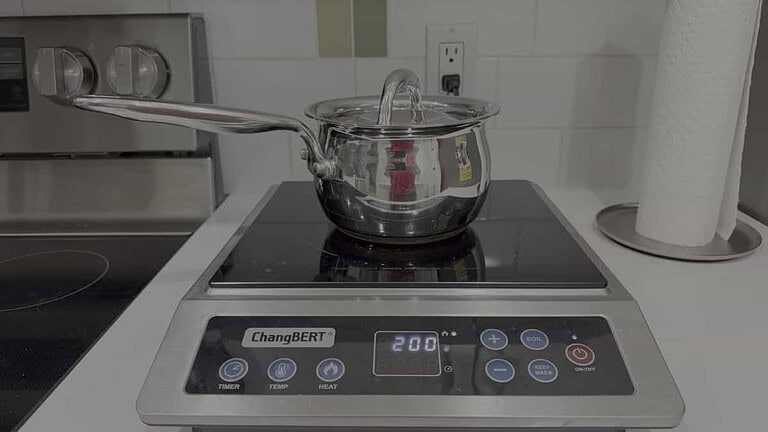
A portable induction burner such as the models in our portable induction cooktop guide is designed around the electrical limits of the outlet it uses. It is comparatively affordable, easy to store and excellent as an extra cooking station. It does not promise full-size four-zone built-in performance or a powerful integrated battery. The Impulse is almost the opposite: it is a premium appliance for a permanent kitchen installation with high peak performance and higher long-term ownership complexity.
If your goal is simply to cook a meal without remodeling the kitchen, you probably do not need battery assistance. First understand portable induction electrical requirements and choose a conventional countertop unit. But if you’re creating a luxury kitchen and want cutting-edge performance without defaulting to a traditional high-current cooktop connection, the battery-integrated approach deserves a serious look.
Temperature precision: a more useful luxury feature than raw speed?
Many induction units have numbered power settings, and some portable units have temperature modes. That does not always mean they directly measure the temperature of the food or the cooking surface. There can be a gap between a selected target and what is actually happening in a pan. Our explainer on power mode versus temperature mode walks through that distinction.
The appeal of Impulse’s sensor system is an attempt to reduce that gap. For the home cook who regularly makes custards, delicate fish or carefully seared steaks, fine control could be the stronger reason to buy than the spectacular boil claim. Still, temperature performance should be judged with compatible cookware and real recipes; no manufacturer claim guarantees uniform temperature across every pan.

Installation, safety and maintenance considerations
- Confirm the exact electrical plan. The manufacturer says 120V/15A is supported, but an installer should check outlet condition, circuits, local code and the supplied instructions. Do not improvise with adapters or extension cords.
- Measure the cabinet below. The battery and electronics occupy more under-counter depth than many standard cooktops. Check drawers, wall-oven compatibility and required airflow.
- Plan proper ventilation. Induction avoids a combustion flame, but frying, sautéing and boiling still release moisture, grease and particles. See our induction ventilation guide.
- Use compatible pans. A magnetic, appropriately sized base is essential. Refer to our cookware compatibility checklist.
- Understand ownership terms. Ask about battery-service availability, warranty exclusions, software-update support and what happens if a component needs replacing years from now.
Who should buy it—and who should skip it?
A good match for a top-tier kitchen
The strongest customer is a homeowner already spending on premium cabinetry, countertops and high-end cooking equipment. That shopper values clean lines, ambitious technology, precise controls and a showpiece cooking experience. If you want the best-of-the-best experience and the price fits the overall renovation, Impulse occupies a genuinely different category from ordinary induction.
Probably unnecessary for most households
If your existing 240V induction cooktop works well, its faster-than-gas response and familiar controls may already meet your needs. Spending several thousand dollars for the battery function is hard to justify on utility-bill savings alone. If you care primarily about price, reliability and straightforward service, compare established 30-inch models in our Bosch, GE Profile and Frigidaire buying guide.
Frequently asked questions
Will a 120V outlet charge the battery while I cook?
That is the basic design, but the actual charging rate and simultaneous cooking limits depend on appliance conditions. The manufacturer recommends using a suitable 240V connection where one is available for certain future energy features.
Does this work during a power outage?
Do not assume it functions as backup cooking during an outage. An internal battery alone does not guarantee off-grid operation or power export. Verify the manufacturer’s supported operating modes and current software before treating it as emergency equipment.
Is the 10 kW claim four times 10 kW all day?
No. A peak-per-burner rating should not be added up as a continuous combined rating. Ask about total available simultaneous output, duty cycle, battery state and sustained cooking capabilities.
Is a battery-assisted cooktop worth $7,000?
For a budget-focused shopper, almost certainly not. For someone building a luxury kitchen around premium technology, custom design and unusually precise control, it can be worth considering alongside other premium options, such as induction cooktops with integrated downdraft ventilation.
Our verdict
Exciting technology, but a specialist purchase. Battery-assisted induction solves a real electrical challenge in an inventive way and makes powerful cooking possible without treating the wall outlet as a 10,000-watt source. Our biggest advice is to buy it for the whole experience—premium precision, design and installation flexibility—not for an eye-catching power number alone. Before making a deposit, confirm real-world sustained cooking limits, installation compatibility and after-sales support.
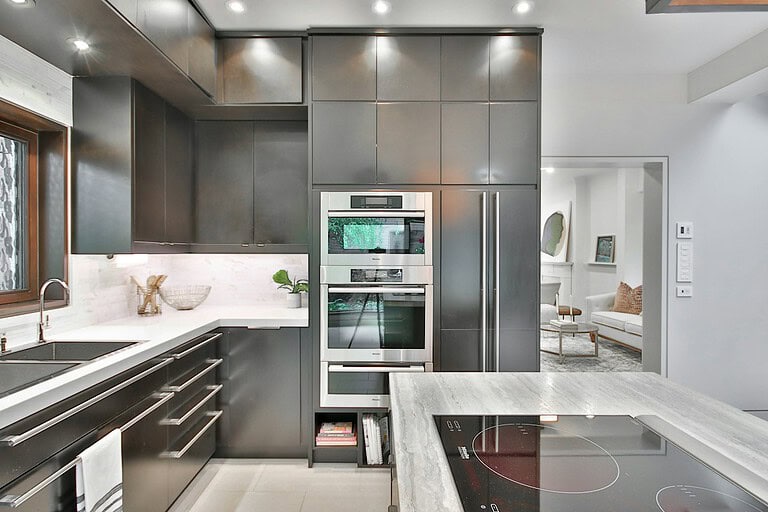
Editorial note: This is a researched buying guide, not a hands-on Impulse review. The photographs illustrate home cooking and do not depict the Impulse product itself.
Sources and specification notes (click to expand)
Specifications are from the manufacturer unless otherwise stated; pricing, availability and installation requirements can change.