Duxtop 9600LS vs 9100MC vs 8100MC: Which Duxtop Should You Buy?
As an Amazon Associate I earn from qualifying purchases. It doesn’t change what I recommend.
Duxtop 9600LS vs 9100MC vs 8100MC
Compare the key features, then see current product details and pricing on Amazon.
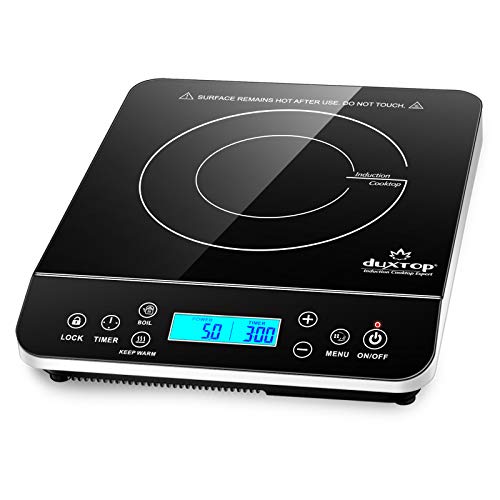
20 power levels, 100–1800W
20 temps, 100°F–460°F
Timer up to 10 hours
Best overall
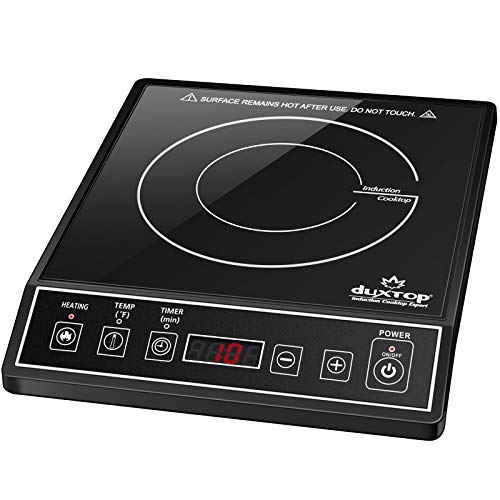
10 power levels, 200–1800W
10 temps, 140°F–460°F
170-minute timer
Best for canning on a budget
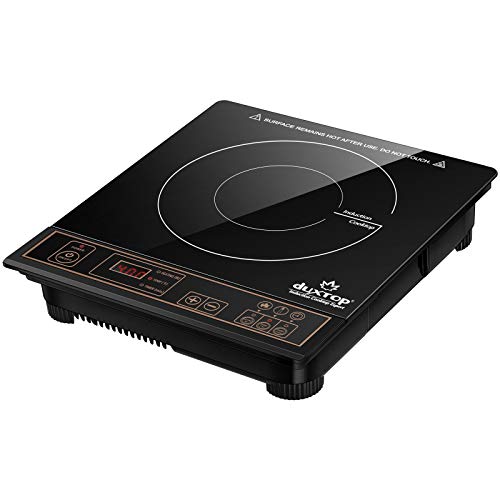
10 power levels, 200–1800W
10 temps, 140°F–460°F
170-minute timer
Cheapest of the three
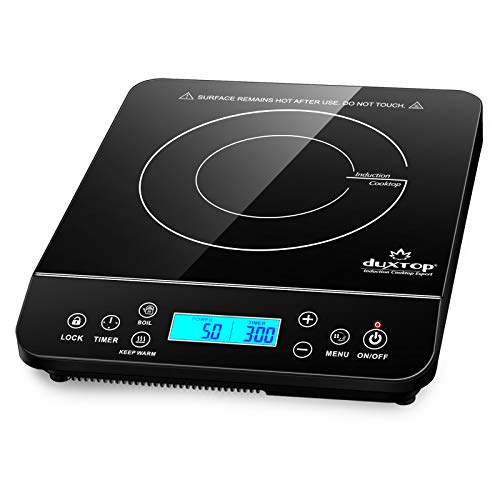
Same internals as the 9600LS
Black finish
Buy whichever is cheaper
Same as 9600LS
As an Amazon Associate, we may earn a small commission from qualifying purchases.
Duxtop makes some of the most popular portable induction burners out there, and three of them get compared constantly: the 9600LS, the 9100MC and the 8100MC. They all max out at 1800 watts and all plug into a normal outlet. So why does one cost more than the others?
Short version: it’s all about control at the low end. Here’s how they actually differ, who each one is for, and which one I’d buy.
The quick answer
- Get the 9600LS if you’ll cook on it most days. Twice the settings, a lower minimum power and a much longer timer.
- Get the 9100MC if you want a simple, proven burner, especially for canning. Presto reported testing it with its induction canner.
- Get the 8100MC if price is everything. On paper it matches the 9100MC; it’s the older gold-colored design.
Side-by-side specs
| Spec | 9600LS | 9100MC | 8100MC |
|---|---|---|---|
| Max power | 1800W | 1800W | 1800W |
| Power levels | 20 (100–1800W) | 10 (200–1800W) | 10 (200–1800W) |
| Temperature settings | 20 (100°F–460°F) | 10 (140°F–460°F) | 10 (140°F–460°F) |
| Timer | Up to 10 hours | 170 minutes | 170 minutes |
| Controls | Sensor touch + LCD | Push buttons | Push buttons |
| Presets | Keep Warm, Boil | No | No |
| Price tier | Highest of the three | Middle | Usually lowest |
The 9600LS numbers come from Duxtop’s manual. The MC numbers come from Duxtop’s listings and retailer specs. Also, the 9610LS is the black version of the 9600LS with the same internals, so buy whichever is cheaper.
Duxtop 9600LS: the one I’d buy
Duxtop 9600LS (best overall)
- 20 power levels from 100 to 1800 watts, so low simmers are actually low
- 20 temperature settings from 100°F to 460°F
- Timer up to 10 hours, plus Keep Warm and Boil presets
- Touch controls and an LCD that's easy to wipe clean
As an Amazon Associate, we may earn a small commission from qualifying purchases.
Duxtop 9600LS: Pros & Cons
Why it is worth paying a little more than for the MC models.
Pros
- Lower minimum power Goes down to 100 watts versus 200 on the 8100MC and 9100MC, which helps with sauces, melting chocolate and simmering.
- Twice the steps 20 power and 20 temperature settings, so you are not stuck jumping between too hot and too cool.
- Long timer The Duxtop manual lists a timer up to 10 hours, versus 170 minutes on the MC models.
Cons
- Touch controls Sensor-touch buttons can be fussy with wet fingers or if a pot handle sits over the panel.
- Temperature is an estimate The Duxtop manual says the readout only estimates actual pan temperature.
- Costs more Usually priced above the 8100MC for the same 1800-watt maximum.
If you cook on it daily, the 9600LS is the one to get. Max power is the same; low-end control is where it wins.
The big win is the bottom of the range. The 9600LS goes down to 100 watts, half of what the MC models can do. On a cheap burner, “low” often means the coil pulses on and off to fake a lower setting, which can scorch sauce in spots or make rice boil over. More steps and a lower floor make that less of a problem. A CNN Underscored reviewer also found the 9100MC didn’t hold a set heat as smoothly as the 9600LS.
You also get a 10-hour timer, which makes it handy for stocks and long braises, and Keep Warm and Boil presets. I covered it in more depth in my full Duxtop 9600LS review.
- Buy it if: it’s your main burner, you’re in a dorm, apartment or RV, or you do delicate stuff like sauces and chocolate.
- Skip it if: you hate touch controls, or it’s only for boiling water a few times a month.
Duxtop 9100MC: the simple workhorse
Duxtop 9100MC (middle pick)
- 10 power levels from 200 to 1800 watts
- 10 temperature settings from 140°F to 460°F
- 170-minute countdown timer
- The portable Presto reported testing with its 01784 induction canner
As an Amazon Associate, we may earn a small commission from qualifying purchases.
The 9100MC is plain and reliable. Ten power levels, ten temperature settings, physical buttons and a 170-minute timer. It boils just as fast as the 9600LS, because the max power is the same.
Its claim to fame: Presto told extension educators it tested the 9100MC with its 01784 induction pressure canner and found it acceptable. If canning is the reason you’re buying a portable, that’s worth a lot. See my best portable induction cooktop for canning for the full setup.
- Buy it if: you want buttons over touch, or you’re setting up a canning burner on a budget.
- Skip it if: you simmer a lot. The 200-watt floor and bigger steps make gentle cooking harder.
Duxtop 8100MC: the budget pick
Duxtop 8100MC (budget pick)
- Same core numbers as the 9100MC: 10 power levels and 10 temperature settings
- Physical push buttons that work with wet or greasy fingers
- 170-minute countdown timer
- Usually the cheapest way into a name-brand induction burner
As an Amazon Associate, we may earn a small commission from qualifying purchases.
The 8100MC is the original gold Duxtop that a lot of people started with. Its listed specs match the 9100MC: 10 power levels from 200 to 1800 watts, 10 temperature settings from 140°F to 460°F, and a 170-minute timer. The difference is mostly the look, the panel layout and a few dollars.
Owner complaints for both MC models are the same: the fan is noisy, low settings cycle on and off, and the temperature jumps are coarse. They’re still great for boiling, searing and stir-frying, which is what most people actually use a portable for.
- Buy it if: you want the cheapest name-brand induction burner for boiling, searing and backup cooking.
- Skip it if: the 9100MC is on sale for the same price. Then just get the 9100MC.
9600LS vs 9100MC: is the upgrade worth it?
Think of it per meal. If you use the burner five times a week for three years, that’s about 780 meals, so the extra cost of the 9600LS works out to a few cents a meal for the better control. For a main burner, that’s an easy yes. For a backup that lives in the closet, it’s not.
Energy cost is the same for all three. At full power, an hour of cooking is 1.8 kWh, about 30 cents at 17 cents a kWh. Most meals use a fraction of that.
Things that are the same on all three
- Needs magnetic cookware. Do the magnet test; see how to tell if cookware is induction ready.
- Needs a 15-amp circuit. Don’t share it with a kettle or toaster; see portable induction electrical requirements.
- Auto shutoff. They shut off with no pan and after a period with no button presses. If yours is cutting out mid-cook, read induction cooktop turning on and off.
- Error codes. E1, E2 and friends are covered in induction error codes by brand.
What about the Duxtop P961LS?
If you’re cooking for a crowd or running heavy pots, Duxtop’s Professional P961LS is the step up. It’s built more like a commercial unit and its manual allows up to 65 pounds on the glass, which makes it my pick for canning. For everyday cooking, though, the 9600LS gives you nearly the same control for less money.
My pick
Get the Duxtop 9600LS (or the black 9610LS, whichever is cheaper). Same max power as the others, but the lower floor and extra steps make it a much better everyday burner. Go 9100MC if you want buttons or you’re building a canning setup, and 8100MC only if it’s clearly the cheapest of the three that day.
Still shopping around? My best portable induction cooktops roundup covers Nuwave and others too, and if you’re taking one on the road, see the best portable induction cooktop for RVs.
Sources
Based on Duxtop manuals and listings, published reviews and owner feedback, not hands-on testing by this site.