True Induction TI-1B Single Burner Cooktop Review
As an Amazon Associate, we may earn a small commission from qualifying purchases.
The True Induction TI-1B is a compact single-zone induction cooktop with different documented product revisions. This review explains its controls, cookware requirements and specifications to check before choosing a particular model.
Unlike a conventional radiant electric element, induction generates heat in compatible cookware. The glass can still become hot from the pan, and the unit must be operated and installed according to the manufacturer’s instructions.
Induction cooktops offer useful features such as direct cookware heating and pan detection. However, they are not safe to touch during or immediately after cooking: hot cookware can heat the glass surface enough to cause burns. Use normal cooking precautions and supervise children.
See Also:Best Portable Induction Cooktops
Compare True Induction Cooktop Models
AzlinkPRO: Legacy True Induction Cooktop Models Comparison
Compare the key features, then see current product details and pricing on Amazon.

Check model controls, power, cookware fit and availability

Check model controls, power, cookware fit and availability
Check model controls, power, cookware fit and availability

Check model controls, power, cookware fit and availability

Check model controls, power, cookware fit and availability
As an Amazon Associate, we may earn a commission from qualifying purchases.
True Induction TI-1B: Specifications and Practical Features
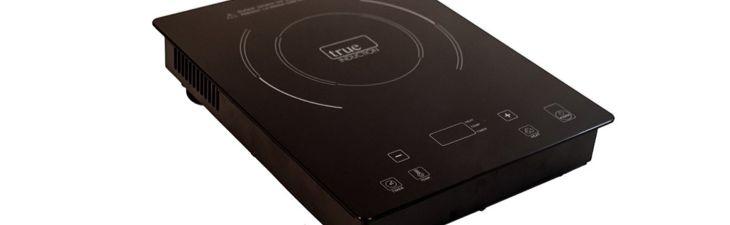
True Induction TI-1B Single Burner Counter Inset Energy Efficient Induction Cooktop 1600 Watts

- 1600 Watts, Cooktop is 11 13/16″ W x 14 15/16″ L x 2 13/16″H, runs off a standard 110V outlet and has 1600 watts of cooking power.
- Easy to clean: the cook top surface is a ceramic glass surface with touch sensor controls under the glass
- Versatile: The unit can be installed into a countertop or used as a portable cooktop making it ideal for many situations
- Requires pans that are made of magnetic materials (cast iron, stainless steel), if a magnet sticks to the pan it will work
Induction can transfer energy efficiently to compatible cookware, but it is not automatically more efficient than every other cooking method or every competing induction model. Compare conditions and appliance specifications before estimating savings.
True Induction’s single-burner products may support built-in or countertop use, depending on model and installation instructions. Check the electrical supply, ventilation clearances and permissible installation for the unit you own.
This review examines the True Induction TI-1B’s listed features, installation options and model-dependent specifications. Consult the official TI-1B product page before relying on an older product listing or purchasing a specific revision.
TI-1B model revisions matter: The same model family appears in documentation with different wattage ratings. Match the appliance label and seller listing to the correct manufacturer manual before comparing performance or electrical requirements.
| Documented version | Rated input | Source |
|---|---|---|
| Earlier TI-1B (2016 manual) | 1,600 watts | 2016 manufacturer manual |
| Updated TI-1B (2023 manual and current listing) | 1,750 watts | 2023 manufacturer manual |
The current True Induction TI-1B product page also links to an older 1,800-watt manual and lists countertop placement as well as built-in installation. Check the exact version’s installation rules, 120-volt supply requirements, cookware limits and warranty before buying or installing. These published specifications are not independent testing.
Related Topic: Duxtop 9600LS Portable Induction Cooktop Review
Features
The relevant TI-1B features to examine include its cooking-level controls, glass-ceramic surface, timer, cookware detection and permitted installation. For the exact specifications and supported operating conditions, refer to the manufacturer’s documentation.
Induction can be efficient, but describing this exact product as 90% energy efficient is not backed by a cited controlled test here. Energy transfer depends on the appliance, cookware, operating settings and test conditions.
Gas, radiant electric and induction cooktops differ in how heat reaches the pan. Any comparison should consider measured performance and cooking conditions; our induction-versus-gas guide explains the trade-offs.
Pan detection and automatic shutoff can help with certain safety and energy-use scenarios, but a specific shutoff interval must be checked in the matching manual. No timer or safety circuit makes cooking safe to leave unattended.
Another thing that you may like about the True Induction Energy Efficient Induction Cooktop is that it is extremely thin and sleek. Yes, it is actually fairly wide and deep, which is convenient because you can fit some pretty large pans and pots on it.
However, at the same time, it is also very thin, which means that it does not protrude off of your counter very much. The True Induction Energy Efficient Induction Cooktop is also very lightweight, making it easy to move from one spot to another.
Published TI-1B specifications have changed by revision: the manufacturer currently lists 1,750 watts and a 150–450°F setting range, while an older manual specifies 1,600 watts. Confirm the rating on your appliance label and the corresponding manual before comparing power or electrical requirements.
The unit provides selectable cooking levels and temperature settings, but a setpoint is not a guarantee of the food’s or pan’s exact temperature. Use appropriate cookware, adjust settings as needed and monitor cooking.
Another advantage of induction is that the glass is not heated by a conventional radiant element. Even so, contact with a hot pan can leave substantial residual heat on the glass. Wait for the appliance’s hot-surface warnings to clear before touching or cleaning the area.
Spills can still bake onto warm glass, and hot cookware can cause burns or ignite cooking oil and nearby combustible material. Pan detection does not eliminate these risks. Keep the area clear, supervise cooking and allow the glass to cool before cleaning.
Some TI-1B manuals document a timer with a maximum of 150 minutes. Read the version-specific instructions to understand whether the timer stops heating and how to set it; do not use it as a substitute for monitoring food.
You might also like how the whole thing is made of ceramic glass, something which is very durable, resilient to wear and tear, and simply looks great too.
Finally, the digital display panel features on the True Induction Energy Efficient Induction Cooktop is another cool aspect. Everything can be easily controlled with the touch of a finger for quick and easy cooking every single time.
Pros:
- Extremely durable and good looking
- Highly energy efficient and cost effective
- Convenient 150 minute countdown timer included
- 10 preset temperature settings as well as precise temperature control
- Adjustable from 150° to 450° Fahrenheit
- Easy to use digital display panel
- Smooth glass surface and no open flame; cookware and glass can still be hot, so burns and cooking fires remain possible
- Lightweight and highly portable
- Automatic 60-second shutoff feature
Cons:
- Only works with induction-friendly cookware
- Included instructions are very confusing
- Scratches very easily—don’t slide pans/pots around on it
Conclusion
The True Induction TI-1B single-burner cooktop is worth considering if its particular revision suits your electrical setup, cookware and available space. Check the manufacturer’s current specifications and manuals before purchasing, especially when reviewing older listings.
Compatible cookware and the cooktop’s power controls can support tasks such as boiling, simmering and sautéing, although results depend on the pan and the food being cooked. For a two-zone alternative, see our True Induction TI-2C dual-burner review.
The temperature and power controls offer flexibility for different cooking techniques. Results still depend on compatible cookware, the recipe, careful monitoring, and the manufacturer’s recommended settings.